Charcoal Grills and Outdoor Griddles: Backyard Buyer's Guide
Choose a charcoal grill for live-fire cooking and an outdoor griddle for meals that need a flat surface. Match the cooker to your regular menu, available space and comfort with fuel and cleanup.
On this page (9 sections)
- Should you choose a charcoal grill or a griddle?
- What kind of charcoal grill fits your backyard?
- Is an outdoor griddle right for your cooking?
- How much cooking space do you really need?
- How should you compare fuel and heat control?
- How do you set up a charcoal grill safely?
- What cleanup and storage should you plan for?
- What common charcoal grill mistakes should you avoid?
- Which charcoal grill or griddle should you choose?
A charcoal grill suits cooks who want food over a charcoal fire, while an outdoor griddle suits meals that need a broad, flat cooking surface. Choose by what you cook most, how many people you usually feed, and how much room you can give cooking and cleanup.
A backyard setup could be a full-size kettle for routine cookouts, a grill with an attached offset smoker for smoke cooking, or a compact griddle for breakfast and quick meals. Each has a different fuel routine and cooking surface.
You don't need one cooker to do everything. Start with your regular menu, then weigh the space, fuel and cleanup each option asks of you.
For more charcoal options, browse our full-size charcoal grills. If your menu calls for a flat surface, compare the choices in our outdoor flat-top griddles guide.
Should you choose a charcoal grill or a griddle?
Choose a charcoal grill for cooking over a charcoal fire and a griddle for cooking on a flat surface. That choice shapes which foods are easy to cook, how you'll adjust heat and what you'll clean afterward.
| Cooking style | A charcoal grill may suit you if | A griddle may suit you if |
|---|---|---|
| Surface | You want a grate over charcoal | You want a flat steel cooking surface |
| Meals | You make burgers, vegetables or other foods over a fire | You make pancakes, eggs, chopped vegetables or foods that benefit from a flat surface |
| Heat | You want to manage airflow and the fire | You want separately controlled burner areas |
| Cleanup | You're comfortable handling ash | You're comfortable handling grease |
A grate lets heat and smoke move around the food, and you can shift pieces to manage hotter and cooler areas. On a griddle, the food sits directly on a continuous surface, which helps keep small pieces together.
Neither style is the automatic winner for every backyard. The menu, storage area and your comfort with the cooking routine matter more than a broad claim that one cooker is more versatile.
A grill also has an open cooking surface, so small foods may need careful placement or a suitable pan. A griddle keeps those foods on the plate, but its flat cooking surface and grease path need their own care.
If you are weighing these styles for the same patio, our charcoal grill vs Blackstone griddle comparison walks through the practical trade-offs. Make the choice around your usual meals, not a once-a-year cookout.
What kind of charcoal grill fits your backyard?
Choose a grill form that matches your space and cooking plans. Kettles suit general backyard grilling, portable models suit compact settings, and grill-and-smoker combinations suit cooks who want a dedicated smoking chamber.
A useful decision starts with where the grill will sit, how far you need to move it and whether you expect to grill only or smoke as well. A large cooking area can be helpful, but it comes with a larger footprint and more equipment to assemble and store.
Is a kettle grill a good first charcoal grill?
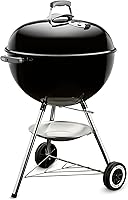
A kettle can be a practical first charcoal grill if you want a lidded cooker with adjustable airflow for regular backyard meals. The Weber Original Kettle 22-inch has a 363 sq in cooking surface, a One-Touch cleaning system and dampers for adjusting airflow.
Its cooking grate fits up to 13 burgers made with a Weber burger press. The angled lid hook gives you a place to hang the lid while you tend to food, and all-weather wheels help you move the grill around the yard.
Pick this kettle for a household that wants one main grill for routine cookouts and occasional small gatherings. The lid and dampers support more than quick, direct grilling, while the cooking area gives you room to arrange food in zones.
Skip it if you need a compact cooker for carrying to a campsite or tailgate, or if you want a flat surface for eggs and pancakes. If you rarely cook over charcoal, its fire-management routine may be more work than you want.
A kettle's circular grate also asks you to think about where each food item goes. Leave room to reach pieces, and avoid packing the grate so tightly that you cannot move food between hotter and cooler areas.
If you need help estimating grate space, see our charcoal grill size guide. Measure the available footprint as well as the grate because wheels and legs need stable ground.
When does a charcoal grill with an offset smoker make sense?
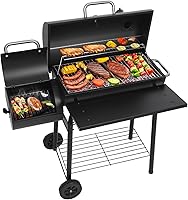
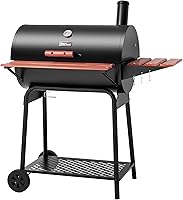
An offset-smoker grill suits buyers who want a charcoal grill with a separate attached chamber for smoke cooking. The Royal Gourmet CC1830S has 475.3 sq in of cooking grates, a 151 sq in warming rack and a 197.3 sq in offset smoker.
The adjustable charcoal pan changes the distance between food and heat. Front and side tables provide work space for seasonings and tools, while the side door allows access for adding charcoal and removing ash.
Choose this setup if smoking is part of your regular plan and you have room for a larger cooker. Its dimensions are 28.56 x 51.69 x 46.89 in, so measure the intended spot and the route to it before choosing.
The extra chambers and work surfaces create more places to manage during setup and cleanup. Skip this format if you only want a simple grill for a few burgers, have little storage room or prefer a compact cooker that can be moved easily.
A lid thermometer can help you keep an eye on the temperature, but it doesn't replace attention to the food and fire. Use the adjustable pan and air vent as part of a deliberate heat routine instead of making large changes all at once.
See our Royal Gourmet charcoal grill guide to compare models, or read whether a charcoal grill with an offset smoker is worth it.
What if your yard or storage space is small?
A portable grill suits a small patio, compact yard or trip where carrying a cooker matters. The Weber Smokey Joe 14-inch has a Tuck-N-Carry lid lock that doubles as a lid holder, plus an ash catcher.
Choose a portable model when a smaller cooking area is enough and you value easy carrying. The Smokey Joe fits 6 burgers made with a Weber burger press, which makes it a better match for small meals than a crowd.
Its compact size brings a clear limit: you have less room to cook several foods at once. Skip it if you often host a group, want space to keep food warm while another batch cooks, or need a full-size grill to stay in one backyard location.
The lid lock helps secure the lid to the bowl during transport, and the ash catcher gives you a place to collect ash. Before taking any charcoal grill on a trip, check the destination's rules for open flames and plan a safe way to transport the cooker after it has cooled.
Our small portable grills guide covers more compact options. For outdoor trips, the charcoal grill for tailgating guide can help you think through portability and setup.
Is an outdoor griddle right for your cooking?
Choose an outdoor griddle if you want one flat surface for foods that can be awkward on a grate. A tabletop model can save space when you have a stable work surface, while a larger griddle can suit cooks who need more cooking area at once.
The Blackstone 1666 22-inch Tabletop Griddle has 361 sq in of cooking space and two independently controlled H-shaped burners. Its cooking capacity is listed as up to 14 burgers, 10 pancakes or 60 hot dogs.
The flat surface can help keep chopped vegetables and smaller foods together as you cook. The rear grease management system guides excess grease into a collection cup, which gives you a defined place to manage it during cleanup.
Choose this griddle for flat-top meals, compact outdoor cooking and separate heat settings across the cooking surface. It can suit breakfast, lunch and dinner when the same group wants different foods prepared together.
Skip it if your main goal is charcoal flavor or if you don't have a suitable table or work surface. A tabletop cooker also needs a place to cool and store after use, so include that in your space check.
The Blackstone weighs 25.3 lb and measures 22.44 x 22.87 x 9.8 in. Check the surface's stability and the manufacturer's setup instructions before use, and don't treat the listed dimensions as the full clearance needed around a working cooker.
For a wider comparison, see our flat-top griddles guide. If you're considering a larger Blackstone, our guide to Blackstone 36-inch griddles explains the space trade-off.
How much cooking space do you really need?
Choose enough cooking area for an ordinary meal without buying around a rare crowd. The number of people is a starting point, because food size, cooking pace and batch cooking all affect how much grate or plate you need.
Use these product examples as reference points rather than universal limits:
| Example cooker | Cooking area or capacity | A useful starting point |
|---|---|---|
| Weber Original Kettle 22-inch | 363 sq in; up to 13 burgers made with a Weber burger press | Regular backyard meals and small gatherings |
| Royal Gourmet CC1830S | 475.3 sq in grates, 151 sq in warming rack, 197.3 sq in offset smoker | More cooking zones and planned smoking |
| Blackstone 1666 tabletop griddle | 361 sq in; up to 14 burgers or 10 pancakes | Flat-top meals for a small group |
| Weber Smokey Joe 14-inch | Fits 6 burgers made with a Weber burger press | Compact meals and portable use |
A total area doesn't mean every item will fit at once. Food shape, spacing and the way you manage heat affect how much you can cook in one batch.
Think about whether your meals need different temperatures at the same time. The Royal Gourmet has an adjustable charcoal pan, and the Blackstone has independently controlled burners, while the kettle gives you airflow dampers and room to arrange food.
If you usually cook in batches, a smaller grill may be enough, as long as you have time and a place to hold finished food safely. If you need the whole meal ready together, prioritize enough usable surface for your usual portions.
Our extra-large charcoal grill guide is a useful next stop if your regular gatherings need more room. For most buyers, though, sizing around frequent meals keeps a grill easier to place and maintain.
How should you compare fuel and heat control?
Pick a fuel and heat-control method you'll be comfortable using every time you cook. Charcoal grills need you to manage the fire, while a propane griddle uses burner controls to set heat across its cooking surface.
A charcoal grill's airflow affects the fire. Dampers let you adjust air, and food placement can help you manage hotter and cooler areas.
The Weber Original Kettle has a rust-resistant aluminum damper for airflow adjustment. The Royal Gourmet adds an adjustable charcoal pan that changes the gap between food and the heat source.
The Blackstone 1666 uses propane and has two independently controlled burners. That gives you separate heat settings across a flat cooking surface.
Think about the work you want to do while cooking. If tending charcoal is part of the appeal, a charcoal grill may fit; if burner controls and a flat plate suit your routine, compare griddles.
Charcoal also means planning fuel, lighting and time for the fire to reach a useful cooking state. Use a safe outdoor location and follow the grill maker's instructions for lighting and operation.
Avoid making frequent, large changes to vents or fuel while cooking. Give a small adjustment time to affect the fire, then watch how the food responds before changing the setup again.
For charcoal fuel choices, our lump charcoal vs briquettes guide explains what to consider. If you want more confidence reading cooking temperatures, see whether you need a charcoal grill thermometer.
How do you set up a charcoal grill safely?
Set a charcoal grill outdoors on a stable, level surface with room around it. Follow the manufacturer's instructions for placement, lighting, ventilation and clearance before the first cook.
Assemble the grill according to its instructions, then check that legs, wheels and shelves are secure before adding charcoal. Keep the cooker away from structures and materials that could be damaged by heat, and never use a charcoal grill indoors.
Plan the cooking area before lighting. Put tools and ingredients within reach, leave a safe path around the grill and choose a place for the lid when you need to tend food.
A chimney starter can make lighting charcoal more organized because it holds the coals together while they ignite. Read our charcoal chimney starter guide if you want to compare that accessory with other lighting methods.
Keep children and pets away from the hot cooking area, and don't move a lit or hot grill. Let ash and fuel cool fully before disposal, following the manufacturer's instructions and local rules.
A tabletop griddle also needs a stable outdoor surface and space around it. Check its fuel connection and operating instructions before lighting, and keep grease management in mind from the start.
What cleanup and storage should you plan for?
Plan for the mess each cooker makes and where it will live between meals. Charcoal grills leave ash to remove, while griddles need grease handled and a place to store the cooking surface.
The Weber kettle's One-Touch system directs ash into an aluminized steel catcher. The Smokey Joe also has an ash catcher, while the Royal Gourmet has a side door for adding charcoal and removing ashes.
Empty ash only after it has cooled completely. Keep it in a suitable noncombustible container and follow the grill maker's disposal instructions; hidden embers can remain hot after the fire appears out.
The Blackstone's rear grease system guides grease into a collection cup. Follow its care instructions for managing grease and caring for the cooking surface, and let the cooker cool before storing it.
Use a cover or protected storage spot to limit exposure to weather. Before buying a cover, compare its dimensions with the grill; our charcoal grill cover guide explains how to find a fit.
Clean the grate or cooking surface after use according to the manufacturer's guidance. Avoid leaving ash, food residue or grease to build up between meals, since those leftovers can make the next cleanup harder.
What common charcoal grill mistakes should you avoid?
The most common mistakes are buying too large, crowding the cooking surface and making heat changes too quickly. A little planning around space and fire management makes a charcoal grill easier to use.
First, measure where the grill will sit and where you will store it. A cooker that fits on paper may still be awkward if the route through a gate or the working space around it is tight.
Second, don't cover every inch of the grate with food. Leave room to turn pieces and move them away from hotter areas when needed.
Third, avoid treating the lid thermometer as a reading of every spot on the grate. Food placement, airflow and distance from the coals all affect the cooking heat around individual pieces.
Another common mistake is to light more charcoal than the meal needs. Follow the grill instructions and use a manageable fire, then adjust airflow and food placement as you learn how the cooker responds.
Finally, don't put away a grill while ash or fuel may still be hot. Allow it to cool fully and use the ash catcher or access door as intended.
Which charcoal grill or griddle should you choose?
Choose the Weber Original Kettle if you want one full-size charcoal grill for regular backyard cookouts. Its 22-inch format, 363 sq in cooking area, airflow dampers and ash-catching system suit a buyer who wants room for family meals and is comfortable tending charcoal.
Choose the Royal Gourmet CC1830S if smoking is a real part of your cooking plan and you have space for its larger cart setup. Skip it if you want the simplest possible grill, don't need the smoker chamber or have a tight storage area.
Choose the Weber Smokey Joe if portability and a compact footprint matter more than cooking several batches at once. Its smaller capacity makes it a poor fit for frequent group meals.
Choose the Blackstone tabletop griddle if flat-top cooking is your priority and you have a stable outdoor table, propane setup and storage plan. Skip it if you want charcoal cooking or don't want to manage a grease collection cup.
Measure your setup and storage spots before choosing a full-size cooker. If you're still deciding between charcoal and a flat top, use our charcoal grill vs Blackstone griddle comparison; if charcoal cooking is the priority, start with the full-size charcoal grill guide.
Frequently asked questions
Should I buy a charcoal grill or an outdoor griddle?
Choose a charcoal grill for food cooked over a charcoal fire, with heat managed through airflow and food placement. Choose a griddle for a flat cooking surface suited to pancakes, eggs, chopped vegetables and similar meals.
Start with the foods you cook most often, then compare the cooker’s size, fuel and cleanup.
What size charcoal grill do I need?
Choose a charcoal grill size based on how much food you cook at once and the space available for the grill. The Weber Original Kettle 22-inch fits up to 13 burgers made with a Weber burger press, while the Weber Smokey Joe 14-inch fits 6.
Measure the setup and storage areas before choosing.
Can a charcoal grill cook low and slow?
A charcoal grill can cook at lower heat when you manage airflow, fuel and the distance between food and coals. Adjustable dampers or a height-adjustable charcoal pan give you ways to control heat, but the result depends on how you set and tend the fire.
Is a tabletop griddle a good choice for a backyard?
A tabletop griddle can suit a backyard when you want a compact cooking surface and have a stable outdoor table or work surface. The Blackstone 1666 has 361 sq in of cooking space and two independently controlled burners.
Check its dimensions, fuel needs and setup instructions before buying.
What should I check before buying an outdoor cooker?
Check the cooking surface, overall dimensions, fuel, heat controls, ash or grease cleanup, and where the cooker will sit during use and storage. Measure both the intended spot and the route to it.
Follow the manufacturer's safety instructions for outdoor placement, ventilation and clearances.