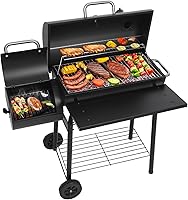
How to Grill Kabobs on a Charcoal Grill
To grill kabobs on a charcoal grill, light a chimney of coals and bank them to one side, then thread meat and vegetables on separate skewers and sear over the coals before sliding them to the cool side. Cook chicken to 165°F and beef or lamb to your preferred doneness.
On this page (8 sections)
- What do you need before you start grilling kabobs?
- How do you set up a two-zone charcoal fire for kabobs?
- How do you keep meat and vegetables from cooking at different speeds?
- How do you grill kabobs on a charcoal grill step by step?
- How do you know when kabobs are done?
- How do you handle flare-ups and sticking on the grate?
- Which grill setup suits your kabob night?
- What should you do after the kabobs come off?
To grill kabobs on a charcoal grill, light a chimney of coals and bank them to one side, then thread meat and vegetables on separate skewers and sear over the coals before sliding them to the cool side. Cook chicken to 165°F and beef or lamb to your preferred doneness.
The setup matters more than any marinade. A two-zone fire gives you a hot spot for color and a cooler spot for finishing, so a skewer can move away from the flames before it burns.
What do you need before you start grilling kabobs?
Gather skewers, a chimney starter, tongs, a brush, a thermometer and a heat-proof tray before lighting anything. The fire is the one part you can't pause once the coals are hot.
Use flat metal skewers or 10 to 12 inch wooden ones. Wooden skewers should soak in water for at least 30 minutes so the exposed ends don't catch fire.
Flat metal skewers stop cubes from spinning when you turn them.
You'll also want two heat zones, which means a grill with enough room to bank coals to one side. Full-size kettles and barrel grills make this easy.
Smaller grills work too, though the cool side gets narrow. If you're shopping for more cooking area, our guide to the extra large charcoal grill options covers what size handles a big skewer load.
Cut meat and vegetables into even 1 to 1.5 inch pieces. Even sizing is what makes a skewer cook at one pace instead of some pieces drying out while others stay raw.
How do you set up a two-zone charcoal fire for kabobs?
Build a two-zone fire by banking lit coals on one half of the grill and leaving the other half empty. That single move is the core of grilling kabobs on a charcoal grill without burning them.
Light a chimney full of briquettes and wait until the top coals are gray with ash. Pour them onto one side of the charcoal grate.
Add a drip pan on the empty side if you want to catch fat and keep cleanup simple.
Set the cooking grate in place and close the lid for a few minutes to heat it. Then brush and oil the grate right before the food goes on.
A clean, oiled grate is the simplest way to stop kabobs from sticking.
For a 22 inch kettle, a full chimney gives a solid hot zone about half the cooking surface. That leaves the same amount of cool space for finishing.
The Weber Original Kettle 22-inch has 363 square inches of cooking surface and a rust-resistant aluminum damper that adjusts airflow for temperature control.
How hot should the coals be for kabobs?
Aim for medium-high heat over the coals, roughly the strength where you can hold your hand above the grate for 3 to 4 seconds. Medium-high sears meat fast without turning the outside to carbon before the center cooks.
If the coals flare when fat drips, move the skewers to the cool side for a minute. Let the flare die down, then return them.
Closing the lid with the vents partly open also tames a hot fire.
How do you keep meat and vegetables from cooking at different speeds?
Thread meat on one skewer and vegetables on another so each cooks at its own rate. This is the single biggest fix for kabobs that end up with charred peppers and raw chicken.
Chicken cubes need 12 to 18 minutes over medium heat. Beef and lamb cubes are usually done in 8 to 12 minutes depending on how you like them.
Vegetables soften in about 10 to 15 minutes. If everything shares one stick, the fast-cooking pieces burn while the meat catches up.
Leave a small gap between pieces so heat reaches every side. Packing cubes tight steams them instead of grilling them.
Keep the skewer ends over the cool zone so the handles stay cool enough to grab.
Marinades with sugar burn quickly, so brush them on near the end. Oil-based rubs applied before cooking are safer over direct heat.
For a smoky finish, consider a charcoal grill with offset smoker, which lets you add wood and hold a gentle fire after the initial sear.
How do you grill kabobs on a charcoal grill step by step?
Grill kabobs by searing over the coals, then finishing on the cool side, turning every 2 to 3 minutes. The full sequence keeps the outside from burning while the inside reaches temperature.
- Light a chimney of coals and bank them to one side.
- Heat and oil the grate.
- Place meat skewers over the coals and don't move them for 2 to 3 minutes.
- Turn each skewer a quarter turn and sear the next side.
- Slide meat skewers to the cool zone to finish cooking through.
- Grill vegetable skewers over the coals with more turning.
- Check doneness with a thermometer, then rest the meat.
Sear each side of a meat skewer for about 2 minutes before moving it. Then finish on the cool side with the lid on.
A lid traps heat and helps thick chicken cubes cook evenly.
Vegetables need more turning and less resting. Keep them over the coals and turn every 2 minutes until they're tender and charred at the edges.
How do you know when kabobs are done?
Use an instant-read thermometer for meat and judge vegetables by texture. Color alone can't tell you whether a chicken cube is safe.
Cook chicken to 165°F in the thickest piece. Beef and lamb are ready at your preferred doneness, and pork should reach 145°F with a short rest.
Vegetables are done when a skewer pierces them easily and the edges show light char.
Pull skewers slightly early and let meat rest 3 to 5 minutes on a clean tray. Carryover heat finishes the job.
Tent loosely with foil rather than wrapping tight, so the crust stays crisp.
How do you handle flare-ups and sticking on the grate?
Control flare-ups by moving skewers to the cool side and closing the lid for a minute. Sticking usually means the grate was dirty or not oiled before the food went on.
Fat dripping onto hot coals is normal and adds flavor. A flare-up that reaches the food is not.
Move the skewer, let the fire settle, then return it. Trim heavy fat from meat before threading to reduce the problem.
For sticking, oil the food as well as the grate. Don't move kabobs for the first 2 to 3 minutes so a crust forms.
Use tongs on the skewer end, never a fork into the meat, since piercing lets juices escape.
Which grill setup suits your kabob night?
A 22 inch kettle is the best all-round setup for most homes, because the half-and-half coal layout fits a full round of skewers with room to move. Pick a portable mangal when you're grilling away from home.
The Weber Original Kettle 22-inch gives you 363 square inches of cooking space, a porcelain-enameled lid and bowl that hold heat, and a 10 year limited warranty. Its One-Touch cleaning system with an aluminized steel ash catcher makes the after-dinner cleanup easier.
The Generic TSG Portable Stainless Steel Mangal Charcoal is the better fit for camping, picnics and small courtyards. It folds flat into a carry bag and includes 6 skewers, 2 tongs, a hand fan and a cleaning brush.
Its open-top design delivers direct-flame heat for shish kebab.
The Weber Rapidfire Chimney Starter rounds out the kit. It measures 7.5 inches across and 13 inches high, with a cone-shaped grate and an ergonomic handle.
A chimney gets coals ready without lighter fluid, so kabobs taste of smoke and meat rather than fuel.
If budget is the deciding factor, our roundup of the charcoal grill for the money picks covers what you get at each tier. A tabletop charcoal grill also works for two people, though the hot and cool zones sit close together.
What should you do after the kabobs come off?
Close the vents to smother the coals and clean the grate while it's still warm. A few minutes of care keeps the grill ready for the next cook.
Let coals burn down with the lid on and the vents closed. Empty the ash catcher once the ash is cool.
Scrub the warm grate with a brush, then oil it lightly before storing.
Keep raw meat and cooked food on separate trays and wash hands and tongs between steps. Skewers that touched raw chicken shouldn't touch the finished kabobs.
Follow those steps and you'll know how to grill kabobs on a charcoal grill with steady heat, real char and meat that's safely cooked. Start with a two-zone fire, keep meat and vegetables on separate sticks, and let a thermometer make the doneness call.
Frequently asked questions
How long do kabobs take on a charcoal grill?
Most kabobs take 10 to 20 minutes. Chicken cubes need 12 to 18 minutes over medium heat, while beef cubes are ready in 8 to 12 minutes.
Vegetables finish in about 10 to 15 minutes.
Start checking early and move skewers between the hot and cool zones to control browning.
Should I soak wooden skewers before grilling?
Yes, soak wooden skewers in water for at least 30 minutes before threading food so the exposed ends are less likely to char. Metal skewers need no soaking.
Either way, keep the handles over the cool zone so you can turn the kabobs without burning your hands.
How do you keep kabobs from sticking to the grate?
Oil the food and the hot grate right before placing skewers on it. Don't move the kabobs for the first 2 to 3 minutes so they form a crust.
A clean, well-oiled grate and steady temperature do most of the work; tongs should grip the skewer, not stab the meat.
Can you grill kabobs directly over charcoal?
Yes, direct heat gives kabobs their char, but it needs watching. Bank coals to one side so you can sear over them and slide skewers to the cooler side to finish.
This two-zone setup lets chicken cook through without burning and lets vegetables soften without scorching.
What is the best way to thread meat and vegetables on a skewer?
Thread meat on its own skewer and vegetables on separate ones so each cooks at its own pace. Leave a little space between pieces so heat reaches every side.
Mixing raw chicken with quick-cooking peppers on one stick is the usual reason a kabob ends up burnt outside and raw inside.