Blackstone 17 vs 22 Inch: Which Griddle Fits Your Patio? (October 2026)
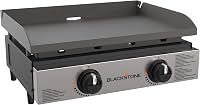
Choose a Blackstone 17-inch griddle for a compact tabletop setup; choose the 22-inch 1666 for more cooking room and two independent heat controls. The 1971 is another 17-inch option with rear grease management.
On this page (7 sections)
- Blackstone 17 vs 22 inch: which size fits your patio?
- How much food can each Blackstone griddle cook?
- Do you need two heat zones?
- How do the grease systems affect setup and cleanup?
- Which 17-inch Blackstone should you choose?
- Is the 22-inch model too large to move?
- Which Blackstone 17 vs 22 inch griddle should you buy?
For the blackstone 17 vs 22 decision, choose a 17-inch model for a compact tabletop setup and the 22-inch 1666 for more cooking room and two independent heat controls. The 1971 is another 17-inch option if you prefer rear grease management.
The 1814 has 268 sq in of cooking space, compared with 361 sq in on the 1666. That difference matters if you often cook several parts of a meal at once or want distinct heat zones.


Blackstone 17 vs 22 inch: which size fits your patio?
The 17-inch models take up less space, while the 22-inch 1666 gives you a larger cooking surface. Measure the table or cart where you plan to use the griddle, then allow room to reach the controls and work around it.
The 1814 measures 17.5 x 18 x 8.5 inches in length, width and height. The 1666 measures 22.44 x 22.87 x 9.8 inches in depth, width and height, while the 1971 measures 17.32 x 21.71 x 8.62 inches in depth, width and height.
Those are griddle dimensions, not the full space you need while cooking. Include the table, nearby walls, and a clear route to the grease collection area when you plan the setup.
If your patio is small, the 1814's compact footprint may be easier to accommodate. If the 22-inch model fits, its larger surface can save you from cooking a meal in as many batches.
Our guide to Blackstone griddle sizes compares these tabletop options with larger models. If you need a larger surface for regular gatherings, see the Blackstone 36-inch griddle.
How much food can each Blackstone griddle cook?
The 1666 offers more cooking area, while the 17-inch models suit smaller meals and tighter setups. Choose based on the largest meal you make often, rather than an occasional feast.
The 1814's surface can cook up to 9 burgers, 9 pancakes or 12 eggs at once. The 1971 has 267 sq in of cooking space and is described as enough for 2 to 4 people.
The 1666 has 361 sq in of cooking space. It can hold up to 14 burgers or 10 pancakes, and its cooking surface is also described as holding up to 60 hot dogs, depending on how they're arranged.
These counts are examples of capacity, not a guarantee that every combination of food will fit neatly. Leave room to turn items and move cooked food aside; crowding makes it harder to manage a mixed meal.
A 17-inch griddle can work well when you cook breakfast for a few people or make one main item at a time. The 22-inch surface makes more sense when you regularly cook several foods together, but it still has a tabletop footprint to plan for.
For other portable flat-top choices, browse our tabletop griddle guide. If you are deciding between a flat top and a charcoal fire, our guide to charcoal grills versus Blackstone griddles explains how their cooking styles differ.
Do you need two heat zones?
Choose the 1666 if you want two independently controlled burners; either 17-inch model has one H-style burner. Separate controls let you set different heat levels across the cooking surface.
That flexibility helps with meals that combine foods needing different heat. You can give one side a different setting while another part of the griddle cooks at its own level.
The 1814 has a built-in igniter and heat adjustment from light to high. The 1971 uses push-and-turn Piezo ignition with temperature adjustment.
The 17-inch models can still cook a wide range of meals, from pancakes and eggs to burgers and vegetables. Skip the 22-inch model if you won't use the extra surface or separate settings and would rather keep the setup smaller.
How do the grease systems affect setup and cleanup?
The 1814 collects drips in an integrated grease tray; the 1666 and 1971 route grease through the back of the griddle. Think about which collection point will be easiest to reach on your table.
On the 1666 and 1971, grease passes through a slot at the back of the griddle plate into a collection cup. Keep that back edge accessible and make sure the cup is in place before you cook greasy foods.
The 1814's integrated grease tray catches drips and has a large capacity, so it does not need frequent emptying during a cooking session. Its arrangement may suit a setup where reaching behind the griddle is awkward.
For any model, let the cooking surface cool before cleaning and follow the griddle's care instructions. Clear food residue and grease after use, and empty the collection area as needed so buildup does not complicate the next cook.
A common mistake is placing a rear-drain model flush against a wall or leaving no room to remove the collection cup. Another is assuming the grease tray or cup replaces surface care; wipe and maintain the cooking surface as the instructions direct.
Which 17-inch Blackstone should you choose?
Choose the 1814 for an integrated grease tray and adjustable-height rubber feet, or the 1971 for rear grease management and push-and-turn ignition. Their cooking surfaces are nearly the same size, so focus on the features you will use.
The 1814 has 268 sq in of cooking space, and the 1971 has 267 sq in. That small difference is less useful than choosing the grease setup and ignition that suit your table and cooking routine.
The 1814's adjustable feet can help it sit steadily on uneven surfaces. The 1971 has non-slip feet and a stainless steel front plate.
Pick the 1814 if your usual setup benefits from its integrated tray and adjustable feet. Pick the 1971 if you prefer a rear grease path and its push-and-turn Piezo ignition.
Is the 22-inch model too large to move?
The 1814 is the lightest option by the stated weight, while the 1666 has the largest footprint and the 1971 falls between them. Consider how often you will carry and store the griddle before choosing by cooking area alone.
The 1814 weighs 9 kg and is described as compact enough to fit in a car trunk. The 1666 weighs 25.3 lb, and the 1971 weighs 17.5 lb.
All three are tabletop models described for portable use, including outdoor cooking and tailgating. For travel, check that the griddle will fit your vehicle and that you have a stable surface at your destination.
A patio griddle that stays in one place does not need to be the easiest to carry. If you take it camping or tailgating often, weight and storage dimensions become part of the buying decision.
For more portable propane options, compare our portable propane griddles. For a wider view of outdoor flat tops, see the flat-top griddle category.
Blackstone 17 vs 22: setup tips and mistakes to avoid
Set the griddle on a stable tabletop with space around the controls and grease collection point. Check the model's instructions before connecting fuel or lighting it, and keep the cooking area clear.
The 1814's description names a 1 lb propane bottle or a 20 lb tank used with a propane adapter hose and regulator; those fuel items are not included. Check the instructions for the correct connection and operating steps for your model.
Before cooking, make sure the griddle sits securely and the grease tray or collection cup is positioned correctly. On the rear-drain models, avoid blocking the back slot or placing the cup where it is hard to remove.
A common mistake is buying by the cooking surface alone and discovering that the table is too small. Another is assuming that all 17-inch models have the same grease system: the 1814 uses an integrated tray, while the 1971 routes grease to the rear.
Plan the meal around the available surface. Cooking in manageable batches is easier than crowding the griddle, and the 1666's separate controls are useful only if you expect to cook foods at different heat levels.
After cooking, let the surface cool and clean it according to the model instructions. Keep grease collection parts clear, and store the griddle as directed so it is ready for the next outing.
Which Blackstone 17 vs 22 inch griddle should you buy?
Choose the 1666 if you regularly need more cooking room or two heat zones. Choose the 1814 for a compact setup with an integrated grease tray, or the 1971 for a similarly sized griddle with rear grease management and push-and-turn ignition.
The 17-inch models fit smaller patios, limited storage and meals that do not need much cooking space at once. Skip them if you often cook a full meal in one round or want to manage different foods at separate heat levels.
The 22-inch 1666 suits small families and groups who want more surface without moving to a full-size backyard griddle. Skip it if its larger footprint and weight do not fit your storage or travel routine.
Measure your table, think through your most common meal, then decide whether two heat zones would change how you cook. For the blackstone 17 vs 22 choice, get the 17-inch size when compactness leads; choose the 22-inch when capacity and control matter more.
Frequently asked questions
Is a Blackstone 17-inch griddle big enough for a family?
The 1814's 268 sq in cooking surface is described as enough for burgers or breakfast for a family of 4, and it can cook up to 9 burgers, 9 pancakes or 12 eggs at once. If you regularly cook several foods at the same time, the 22-inch model gives you more surface and 2 heat controls.
What is the difference between the Blackstone 1814 and 1971?
Both are 17-inch tabletop griddles with about 267 to 268 sq in of cooking space and an H-style burner. The 1814 has an integrated grease tray and height-adjustable rubber feet; the 1971 has rear grease management, non-slip feet and push-and-turn Piezo ignition.
Can the Blackstone 22-inch cook at 2 temperatures?
The 1666 has 2 independently controlled H-shaped burners, so you can set different heat levels across the griddle. That helps when one part of a meal needs a different temperature, though it doesn't increase the total cooking area beyond the model's 361 sq in surface.
Which Blackstone tabletop griddle is easier to carry?
The 1814 is described as compact and lightweight, with dimensions of 17.5 x 18 x 8.5 inches in length, width and height for its portable setup. The 1666 is also described as portable, but its dimensions are larger; compare your storage space and travel setup before choosing.