How Hot Can a Charcoal Grill Get?
A charcoal grill can reach about 700°F to 900°F at the grate with a full chimney of fully lit briquettes. Most backyard grills settle between 500°F and 700°F for everyday cooking, and you control the number with fuel amount and airflow. Lump charcoal can push the grate hotter still.
On this page (8 sections)
- How hot can a charcoal grill get at its peak?
- How much charcoal does it take to reach 700°F?
- How do vents control how hot a charcoal grill gets?
- Why does my grill run cooler than the numbers say?
- How hot is too hot for a charcoal grill?
- How do you hold a steady temperature for low and slow cooking?
- How long does the heat last, and when do you add coals?
- What should you check before your next cook?
A charcoal grill can reach about 700°F to 900°F at the grate with a full chimney of fully lit briquettes. Most backyard grills settle between 500°F and 700°F for everyday cooking, and you control the number with fuel amount and airflow.
Lump charcoal can push the grate hotter still.
So how hot can a charcoal grill get in normal use?
Hot enough to sear a steak in minutes, and cool enough to roast chicken low and slow, if you manage the fire.
The peak temperature depends on three things you already own: how much charcoal you load, how much air the grill lets in, and how close the food sits to the coals. Change any one of them and the reading at the grate moves.
How hot can a charcoal grill get at its peak?
A well-vented grill packed with fully lit briquettes tops 900°F at the grate, and loose lump charcoal runs hotter still. That's the ceiling most backyard cooks will ever see.
Everyday cooking happens well below it.
The number is measured at grate level, where the food sits, not at the lid. A dome thermometer reads cooler than the coals because it sits away from the fire.
A full chimney of briquettes spreads into a layer several inches deep and radiates straight up into the grate.
Heat climbs fastest in the first minutes after the coals are dumped. Pile them to one side for a hot zone that sears and a cooler side that finishes.
Grills with deep fireboxes hold more fuel and sustain a higher reading than shallow portable models.
Why does the temperature vary so much between grills?
Firebox depth, vent size and grate height set how hot each grill runs. A deep bowl holds more coals and keeps them close together.
A wide, shallow bowl spreads them out and loses heat to the air.
Vent size matters as much as fuel. Wide-open top and bottom vents feed the fire with oxygen and push the peak up.
A small vent opening chokes the fire and pulls the reading down.
Grate height is the third lever. Coals sitting 2 inches under the grate heat food harder than coals 6 inches below.
If you own an extra large charcoal grill, expect more fuel capacity and a longer hold at high heat.
How much charcoal does it take to reach 700°F?
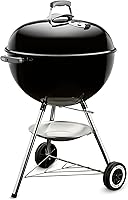
A full chimney of briquettes, roughly 5 to 6 pounds, is enough to hit 700°F in a typical kettle or barrel grill. Fill the starter to the top, light it, and wait until the top layer turns gray.
A half chimney lands nearer 450°F to 550°F. That range suits burgers, chicken pieces and vegetables.
Save the full load for steak, searing and anything that needs a hard crust.
Briquettes burn steady and predictable, so they're the easier fuel for a target number. Lump charcoal lights faster and burns hotter, but it also fades faster.
For a long session, keep a spare chimney of coals waiting.
The Weber Rapidfire holds a generous load in a 7.5 in wide bin and uses a cone-shaped grate to get coals lit quickly. Its alloy steel body and plastic handle make it comfortable to tip over the firebox.
How do vents control how hot a charcoal grill gets?
Open vents feed oxygen and raise the heat; closing them starves the fire and lowers it. The bottom vent controls how much air reaches the coals, and the top vent controls how fast hot air leaves.
For maximum heat, open both vents all the way. For a moderate 400°F to 500°F, close the bottom vent partway and leave the top vent open so smoke and gases can escape.
Never close the top vent fully while the coals are still glowing, since trapped gases can build up.
Small changes beat big swings. Nudge a vent a quarter turn and give the fire a few minutes to respond before adjusting again.
A lid thermometer shows the result faster than guessing from the coals.
Why does my grill run cooler than the numbers say?
Cold fuel, blocked vents and too little charcoal are the three usual reasons a grill underperforms. Fix those and the reading usually lands where you expect.
Damp charcoal is the most common culprit. Charcoal that has sat in a leaky bag or a humid garage takes longer to light and burns cooler.
Store it in a sealed bin and use a full chimney rather than topping up a weak fire.
Ash buildup blocks the bottom vent and starves the fire. Clear the ash from the firebox before each cook.
A grill that ran hot last week can feel sluggish once a layer of ash covers the vent holes.
Also check how you load the fuel. Coals spread thin across a wide firebox lose contact with each other.
Stack them in a pile until they're fully lit, then spread them to the shape you want.
How hot should the coals be before you start cooking?
Wait until the coals are covered in gray ash before you put food on. Flames and black coals mean the fire is still catching and the heat is uneven.
A full chimney takes about 15 to 20 minutes to reach that stage. When most of the top coals show gray edges, tip them out and spread them.
If you cook over half-lit coals, one side of the food burns while the other stays raw.
A chimney starter gets you there without lighter fluid and its aftertaste. The Amazon Basics model holds up to 6.6 pounds of charcoal and uses a cylindrical shape to concentrate heat.
Its cool-touch plastic handle and large vent hole make it easier to pour safely.
How hot is too hot for a charcoal grill?
Above roughly 700°F, most foods burn on the outside before they cook through. Use that heat for quick searing only, then move the food to a cooler zone.
Steak, thin-cut pork chops and skewers handle high heat well. Thick roasts, chicken legs and anything with sugar in the marinade do better at 350°F to 450°F.
Sugary sauces burn fast over a roaring fire, so brush them on near the end.
High heat also stresses the grill itself. Porcelain-coated grates and painted surfaces can suffer when flames lick the lid for a long time.
Keep a lid thermometer in view so you notice a runaway fire early.
Fat drippings are the other risk. A pile of coals under a fatty cut sends grease onto the fire and throws up flare-ups.
Keep a spray bottle of water nearby and move the food if flames climb.
How do you hold a steady temperature for low and slow cooking?
Use less fuel and a two-zone setup to hold 225°F to 300°F for hours. Pile coals on one side and leave the other side empty, then cook over the empty side with the lid closed.
Start with about a half chimney of lit coals on the hot side. Add a small handful of unlit briquettes on top so they light slowly and keep feeding the fire.
Control the burn with the bottom vent and watch the lid thermometer.
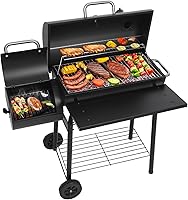
For long cooks like ribs or pork shoulder, a charcoal grill with offset smoker gives you more room to keep the fire away from the food. Its firebox holds a separate coal bed and lets smoke flow across the cooking chamber.
A reliable temperature gauge makes this far easier. The GALAFIRE dial reads 100°F to 700°F on a 3 3/16 inch face, with colored zones for smoke, BBQ and grill ranges.
Its 2 7/8 inch stem and analog dial suit a grill lid or smoker body with a 3/8 inch hole.
How long does the heat last, and when do you add coals?
Fully lit briquettes hold strong heat for about 40 to 60 minutes, then fade. Add fresh coals before the fire dies rather than after the food stalls.
Plan a cook longer than an hour with a spare chimney ready. Light it about 20 minutes before you expect the current fire to drop.
Add the fresh coals to one side so the food keeps cooking while they catch.
A full chimney lasts longer than a small pile because more fuel sits in contact with itself. Spreading the coals into a thin layer speeds the fade.
Keep them grouped and the heat stays put.
Lump charcoal burns out faster than briquettes. If you're using lump for a long session, expect to refuel sooner.
For a quick weeknight cook, either fuel works.
What should you check before your next cook?
Confirm three things before you light up: enough dry charcoal, clear vents and a thermometer you trust. Those three set how hot a charcoal grill gets on any given day.
Load a full chimney when you need searing heat. Use a half load for everyday grilling and a small pile for slow cooking.
Open both vents for the peak and close the bottom one partway for lower temperatures.
Keep a charcoal grill with a tight lid and working vents if you want steady control. A well-sealed lid holds heat better than a loose one.
If you're shopping for a new grill on a budget, our list of the best charcoal grill for the money covers models that hold temperature well.
Read the grate with a thermometer rather than judging by sight. Once you know your grill's typical reading for a full chimney and open vents, you can dial in any temperature you need.
Frequently asked questions
How hot does a charcoal grill get with the lid closed?
A closed lid traps heat and pushes a full load of lit charcoal toward 600°F to 700°F at the grate. Leaving vents wide open holds that peak, while closing them partway drops the reading within minutes.
A dome thermometer helps you track the change.
What is the hottest a charcoal grill can reach?
A packed chimney of fully lit briquettes in a well-vented grill can push the grate above 900°F. Loose lump charcoal burns hotter and faster than briquettes.
Past roughly 1,000°F most grills are limited by airflow and by how much fuel the firebox holds.
Why is my charcoal grill not getting hot?
Cold or damp charcoal, ash blocking the vents, and a lid kept open are the usual causes. Light a full chimney until the top coals turn gray, clear the ash, and leave both vents open.
Wet fuel burns cooler and smokes instead of heating.
How long does a charcoal grill stay hot?
Fully lit briquettes hold strong grilling heat for about 40 to 60 minutes. After that the fire fades and needs fresh coals.
Lump charcoal peaks hotter but burns out sooner.
A full chimney keeps usable heat longer than a small pile.
Can you use a charcoal grill above 700°F?
Yes, for searing steak or blistering peppers over a hot zone. Don't leave fatty food or a coated grate at that heat for long.
Move food to a cooler side once it has a crust so the outside doesn't burn before the middle cooks.