How Long to Cook Steak on a Charcoal Grill
Cook a 1-inch steak about 4 to 6 minutes per side over direct high heat for medium rare, then rest it 5 minutes before slicing. Thicker cuts take longer over slightly lower heat; thinner ones take less.
On this page (9 sections)
- How long do you cook steak on a charcoal grill by thickness?
- How does doneness change the cooking time?
- How do you set up the charcoal grill for steak?
- How hot should the coals be for steak?
- Should you close the lid while steak cooks?
- How do you know when the steak is done?
- What else helps steak cook evenly on charcoal?
- Which grill gear makes steak timing easier?
- What's the right way to time steak on charcoal?
How long to cook steak on a charcoal grill depends on thickness and target doneness, not on a single number. A 1-inch steak needs about 4 to 6 minutes per side over direct high heat for medium rare, then a 5-minute rest.
Timing only works when the fire is set up right. Get a full chimney of coals glowing and banked under the cooking grate, and the clock means something.
Otherwise you're guessing at a moving target.
How long do you cook steak on a charcoal grill by thickness?
Scale the time to the thickness of the meat. A 1-inch steak runs about 4 to 6 minutes per side over direct heat for medium rare.
A 2-inch steak needs roughly 8 to 12 minutes per side, or a sear-then-indirect finish.
The reason thickness matters so much is distance. Heat has to travel from the surface to the center, and a steak twice as thick gives that heat roughly twice the distance to cover.
The outside browns on the surface, but the middle lags behind, so the sear finishes long before the center does.
That gap is why the 2-inch steak in the table gets a sear-then-indirect plan rather than one long stretch over the coals. If you leave a thick cut directly over a hot fire for the whole cook, the crust burns while the center is still cold.
| Thickness | Method | Time per side (medium rare) |
|---|---|---|
| 3/4 inch | Direct, lid open | 2–3 minutes |
| 1 inch | Direct, lid closed | 4–6 minutes |
| 1 1/2 inches | Direct sear, then indirect | 3–4 min sear, 5–7 min indirect |
| 2 inches | Sear, then indirect | 4–5 min sear, 8–12 min indirect |
Treat these as starting points. Coal temperature, wind and how cold the steak went on all shift the finish line.
A thermometer settles it.
How does doneness change the cooking time?
Medium rare is the fastest common target and well done is the slowest. Pull times move by a few minutes per side for each step up the doneness scale, and thick cuts spread wider.
Think of doneness as the internal temperature you're chasing. Each step up the scale asks the heat to push the center a little warmer, and warmer takes longer.
The table times are the window you'd expect on a 1-inch steak over direct heat.
For a 1-inch steak over direct heat:
- Rare: pull at about 120°F, roughly 3 to 4 minutes per side.
- Medium rare: pull at about 125 to 130°F, roughly 4 to 6 minutes per side.
- Medium: pull at about 135 to 140°F, roughly 6 to 7 minutes per side.
- Medium well to well done: pull at 145 to 155°F, roughly 7 to 9 minutes per side.
Pull early. Carryover heat pushes the internal temperature up 5°F or so while the steak rests.
If you want medium, take it off closer to medium rare.
Why do thick steaks need two zones?
A thick steak asks for two jobs at once. You want a browned, crisp crust and an evenly cooked center, and one zone of direct heat struggles to do both.
A two-zone fire splits the work. The steak starts over the coals to build the crust, then moves to the empty side where gentler, indirect heat finishes the center without burning the outside.
The time per side in the table then splits into a short sear and a longer indirect stretch.
The kettle's damper makes this easier to manage. A rust-resistant aluminum damper adjusts airflow without fuss, so you can hold a steady fire through a long indirect finish instead of watching the coals fade.
How do you set up the charcoal grill for steak?
Build a two-zone fire and preheat the grate. Bank lit coals on one side for a hot sear zone and leave the other side empty as a cooler zone.
That gives you a place to move the steak if it browns too fast.
Use a chimney starter to light the coals. The Weber Rapidfire holds a full load and gets coals glowing without lighter fluid.
Its cone-shaped grate and durable steel body mean you fill it, light it and pour when the top coals ash over.
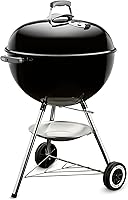
A full-size kettle like the Weber Original Kettle 22-inch gives you room for the hot and cool zones and a lid to close for thicker cuts. Its 363 square inches of cooking area leaves room to bank coals on one side and still have a clean cooler zone on the other.
For bigger cooks or offset setups, see our picks for an extra large charcoal grill or read whether a charcoal grill with offset smoker earns its space.
How hot should the coals be for steak?
Aim for a hot fire you can hold your hand over for only 2 to 3 seconds. Coals should glow orange with a light layer of gray ash.
That's a searing fire in the 450 to 500°F range at grate level.
Thick steaks benefit from slightly gentler heat so the outside doesn't char before the center cooks. Spread coals a bit thinner or move the steak to the cooler zone.
The kettle's lid damper lets you trim airflow and cool things down.
A cold or half-lit fire is the most common timing problem. Coals that are still black in the middle won't hold heat, and the steak sits there steaming instead of searing.
Wait until the top layer ashed over before you pour.
Skip lighter fluid. A chimney gets coals ready in about 15 to 20 minutes, and the coals burn clean and even.
Tongs, a thermometer and a sturdy grate are all you really need.
Should you close the lid while steak cooks?
Close the lid for steaks 1 inch thick or thicker. Trapped heat cooks the center evenly and keeps the coals from flaring.
For thin steaks, keep the lid open so you can watch the crust and pull them fast.
With the lid closed, vent the top damper to control airflow. Check the steak sooner than the timer suggests the first time, then set your own times.
Hanging the lid on the kettle's angled hook keeps a hand free while you flip.
The lid also matters for the indirect finish on thick cuts. Once the steak moves to the cooler zone, the closed lid keeps warm air circulating around it.
Without the lid, the cool side just sits in open air and the center takes far longer to catch up. The porcelain-enameled lid and bowl hold that heat in without rusting or peeling over time.
How do you know when the steak is done?
Use an instant-read thermometer in the thickest part. Pull the steak 5°F below your target and let it rest.
For medium rare, look for about 130 to 135°F after the rest.
For thin steaks without a thermometer, watch for a browned crust and juices that bead on the surface. Press the center with tongs: soft means rare, springy means medium, firm means well done.
These tests are rough, so a thermometer is worth the small cost.
Let the steak rest on a warm plate for 5 to 10 minutes. Don't tent it too tightly or the crust softens.
Slice against the grain.
How should you handle a flare-up?
Flare-ups are the fastest way to blow past your times. When fat drips onto hot coals, flames shoot up and the surface chars while the center is still behind.
Move the steak to the cooler zone first. Then close the lid for a minute to cut the airflow feeding the flames.
When the fire settles, slide the steak back over the coals and keep going.
Keep the coal bed even and don't crowd the grate. A little open space lets you park a steak in a hurry when the fire gets lively.
What else helps steak cook evenly on charcoal?
Dry the surface and keep the coal bed even. Pat the steak dry and season it before it goes on.
A dry surface browns faster and releases from the grate more cleanly.
A dry steak also gives you a head start on the clock. Wet meat has to steam off surface moisture before it can brown, so the sear starts later and the per-side times stretch.
Patting it dry with a paper towel takes seconds and puts you back on schedule.
Keep a small clear space on the grate with no coals under it. That's where you park a steak that's flaring or cooking too fast.
Trim flare-ups by moving the meat and closing the lid for a minute.
Wipe the grate with oil before it heats, and clean ash out afterward so airflow stays good. The kettle's One-Touch cleaning system has an aluminized steel ash catcher, so ash drops away from the bowl instead of smothering the coals on your next cook.
If you also cook on a flat top, a charcoal grill and a griddle station each handle steak differently. The Blackstone 36-inch griddle offers 720 square inches and four burners for smash-style cooks, while the kettle does the sear-and-rest method well.
Which grill gear makes steak timing easier?
A kettle with good airflow control and a chimney starter do most of the work. The kettle's dampers let you hold a steady fire, and the chimney gets you to searing heat without waiting on lighter fluid.
The kettle's all-weather wheels and tool hooks keep the whole setup easy to move and keep your tongs and thermometer within reach. The 363-square-inch grate holds up to 13 burgers at once, so a steak cook with a few sides won't crowd you.
If you grill steak often and also want a big cooking area, a charcoal grill for outdoor cooking should fit your patio and your party size. Match the size to your typical crowd, not your biggest one.
What's the right way to time steak on charcoal?
Cook a 1-inch steak about 4 to 6 minutes per side over direct heat for medium rare, then rest 5 minutes. For a thick cut, sear over the coals and finish on the cooler side.
Watch the crust, use a thermometer, and pull 5°F early. That's how long to cook steak on a charcoal grill in practice: the numbers set the clock and the thermometer makes the call.
Get your fire right first with a chimney and a full-size kettle. Then adjust times by thickness and doneness, and let the rest finish the job.
A little practice and you'll stop watching the clock.
Frequently asked questions
How long should I cook a 1-inch steak on a charcoal grill?
Plan about 4 to 6 minutes per side over direct high heat for medium rare. Move the steak to the cooler side if the crust darkens before the center reaches your target temperature, and use a meat thermometer to confirm doneness.
How long does a thick 2-inch steak take on charcoal?
Allow roughly 8 to 12 minutes per side, depending on how hot the coals run. Thick steaks do better with two-zone heat: sear over the coals, then finish on the cooler side so the center catches up without burning the crust.
Should I cook steak with the grill lid open or closed?
Close the lid for steaks 1 inch thick or more so the heat surrounds the meat and the center cooks evenly. Leave the lid off for thin steaks, which can overcook in the time it takes to close it and walk away.
How do I know when steak is done on a charcoal grill?
Use an instant-read thermometer in the thickest part, away from bone and fat. Pull the steak 5°F below your target because it keeps cooking as it rests.
Medium rare reads about 130 to 135°F after resting.
How long should steak rest after grilling?
Rest it 5 to 10 minutes on a warm plate or board. Resting lets the juices settle so they stay in the meat when you slice.
Larger cuts like a thick ribeye benefit from the longer end of that range.
Can I cook steak on charcoal without a thermometer?
You can, but the timing gets less reliable. The finger-poke test and checking for clear juices are rough guides.
A cheap instant-read thermometer removes the guesswork, especially with thick cuts and uneven coal beds.